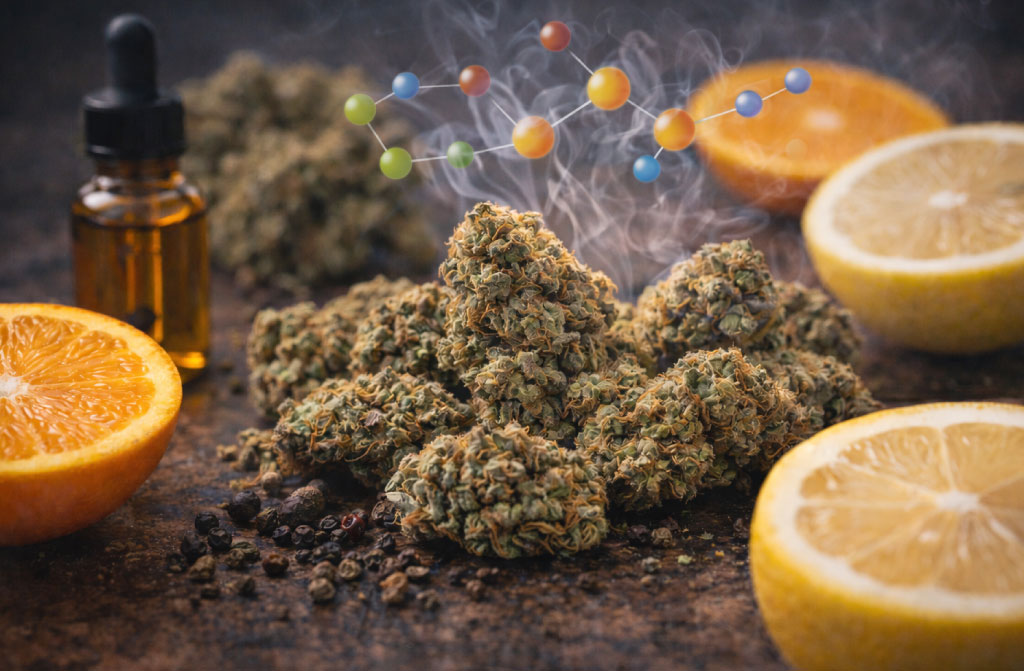
Terpene sensory perception explains a phenomenon familiar to many cannabis consumers: flavor often feels like part of the effect itself. Citrus-forward profiles may feel “uplifting,” pine-like aromas are often described as “clear,” and earthy or musky notes are associated with heaviness or calm. While these descriptions are subjective, they are not imaginary. The human brain is wired to integrate sensory input—especially smell—directly into emotional, cognitive, and physiological interpretation.
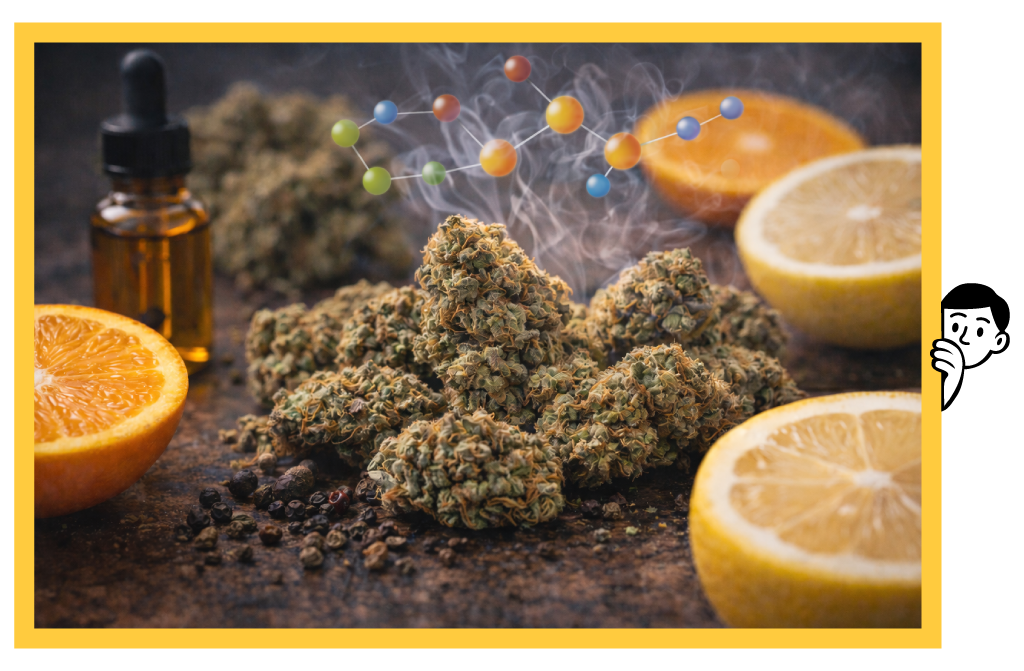
In cannabis products rich in volatile aromatic compounds, such as live resin cartridges, terpenes do more than provide flavor. They shape how the brain contextualizes cannabinoid effects, influencing attention, mood, and expectation. Understanding why flavor feels like an effect requires examining how the brain processes aroma and how sensory input interacts with psychoactive signals.
How the Brain Processes Aroma and Flavor
Flavor is not a single sense. It is a multisensory experience created by the integration of olfaction (smell), gustation (taste), and somatosensory input (texture, temperature, irritation). Among these, smell plays the dominant role. Volatile molecules enter the nasal cavity either through the nostrils or retronasally during exhalation and bind to olfactory receptors.
Signals from these receptors travel directly to the olfactory bulb, which connects to the limbic system—regions involved in emotion, memory, and motivation. Unlike vision or hearing, olfactory signals bypass the thalamus, reaching emotional processing centers almost immediately. This direct pathway helps explain why aroma can evoke strong feelings or memories before conscious evaluation.
Neuroscience research summarized in databases indexed by NIH’s NCBI shows that olfactory input can alter attention, mood, and perceived intensity of concurrent stimuli. In cannabis use, this means terpene-driven aroma can bias how cannabinoid effects are interpreted, even when the pharmacological input remains constant.
Terpenes as Sensory Modulators, Not Psychoactive Agents
Terpenes are not intoxicants in the way THC is. At typical inhaled concentrations, they do not produce strong direct psychoactive effects. However, their sensory impact is powerful. Terpene sensory perception operates through modulation rather than intoxication, shaping the brain’s interpretive frame rather than directly altering neural firing patterns.
For example, citrus-associated terpenes such as limonene are strongly linked to alertness and positive emotional valence through learned associations and sensory bias. When these aromas accompany THC delivery, the brain may interpret heightened arousal as clarity or energy rather than anxiety. This does not require terpenes to cross the blood–brain barrier in large amounts; the sensory signal alone is sufficient to influence perception.
Educational overviews on terpene function and sensory bias are frequently discussed in cannabinoid research summaries curated by Project CBD, which emphasize the difference between pharmacological action and perceptual modulation.
Why Flavor Changes the Perceived “Direction” of Effects
One of the most common misconceptions about cannabis is that effects are dictated solely by cannabinoid ratios. In reality, perception plays a major role. The brain constantly integrates sensory cues to predict outcomes. Aroma acts as a predictive signal, shaping expectations before cognitive evaluation begins.
When a flavor profile is perceived as fresh or sharp, the brain may interpret THC-induced arousal as stimulation. When aroma is heavy or musky, the same arousal may be labeled as sedation or calm. This predictive processing framework explains why two products with similar THC content can feel different if their terpene profiles diverge.
This mechanism is well-documented in sensory neuroscience, where aroma is known to bias interpretation of otherwise ambiguous stimuli. Cannabis simply provides a clear example of this phenomenon due to its strong sensory component and psychoactive effects.
Live Resin and Enhanced Terpene Sensory Perception
Live resin products preserve a broader range of volatile aromatic compounds by using fresh-frozen plant material rather than dried flower. This extraction approach results in terpene profiles that more closely resemble the living plant, increasing aroma complexity and intensity.
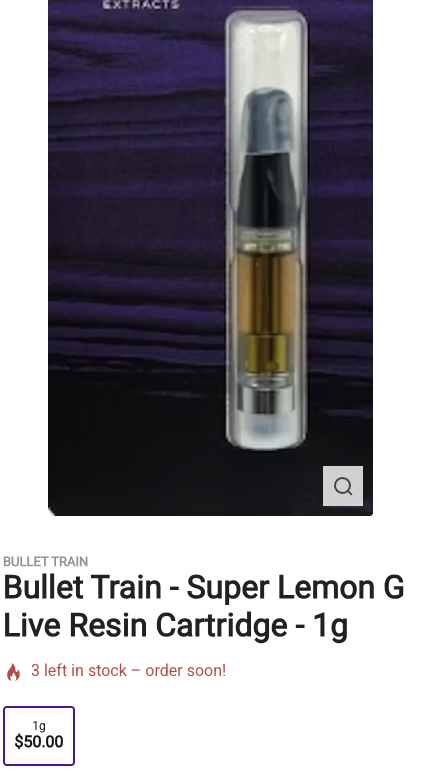
In products such as the Bullet Train Super Lemon G Live Resin Cartridge, the sensory impact of terpenes becomes more pronounced due to higher aromatic fidelity. This does not mean the product is “stronger” in a pharmacological sense, but it does mean the sensory signal accompanying THC delivery is richer, which can amplify perceptual bias.
Broader educational context on extract formats and terpene-rich products can be found across informational sections on The Dispensaries of NJ, where delivery method and formulation are emphasized as experience-shaping variables.
Expectation, Learning, and Sensory Conditioning
Terpene sensory perception is not static. It evolves through learning and experience. Over time, individuals associate certain aromas with specific outcomes. If a citrus-forward profile has previously coincided with enjoyable, focused experiences, the aroma alone may prime the brain for a similar interpretation in future sessions.
This form of sensory conditioning is well established in cognitive neuroscience. Flavor becomes a contextual cue that shapes expectation, which in turn shapes perception. This helps explain why experienced consumers often describe nuanced differences in effects that are difficult to measure chemically.
Importantly, this also means terpene effects are highly individual. Cultural background, personal history, and prior experiences all influence how aroma is interpreted.
Table: How Terpene Sensory Perception Shapes Experience
| Sensory Input | Brain Pathway Involved | Perceptual Outcome |
| Citrus-forward aroma | Olfactory bulb → limbic system | Alertness, positive valence |
| Pine-like aroma | Olfactory + attention networks | Clarity, focus |
| Earthy/musky aroma | Limbic + memory association | Heaviness, calm |
| High aroma intensity | Sensory salience networks | Amplified perception |
| Familiar aroma | Memory and expectation | Predictable interpretation |
Why Terpene Sensory Perception Matters
Understanding terpene sensory perception helps explain why flavor often feels inseparable from effect. It clarifies why individuals disagree about how a product feels, even when cannabinoid content is similar. These differences do not indicate inconsistency; they reflect how human perception integrates sensory cues with psychoactive input.
This perspective also reframes the conversation around cannabis effects. Rather than asking whether terpenes “cause” certain effects, it is more accurate to ask how aroma shapes interpretation. In many cases, flavor does not change what THC does—it changes how the brain understands what THC is doing.
Implications for Informed Cannabis Use
Recognizing the role of sensory processing encourages more thoughtful evaluation of cannabis products. Paying attention to aroma, personal associations, and context provides better insight than relying solely on labels or potency percentages. For terpene-rich formats such as live resin cartridges, this awareness becomes especially important, as sensory cues are strong and immediate.
Over time, tracking how different flavor profiles interact with mood, setting, and expectation can help individuals make more informed choices and reduce unwanted outcomes such as overstimulation or misinterpretation of effects.
Choosing the Right Cannabis Products in New Jersey
Understanding cannabis product types, potency levels, and intended effects makes it easier to navigate dispensary options in New Jersey. With clear information and simple criteria in mind, selecting products that align with personal preferences becomes a more straightforward and confident process.